LAS LENGUAS ANGELICALES DE LAZZARINI
hugo_lazzarini_arte_oncityradio_
LAS LENGUAS ANGELICALES DE LAZZARINI
Hugo Lazzarini: Las Lenguas Angelicales
Documental de la Obra
Dice la biblia: «Si yo hablase lenguas humanas y angélicas, y no tengo amor, vengo a ser como metal que resuena, o címbalo que retiñe.»
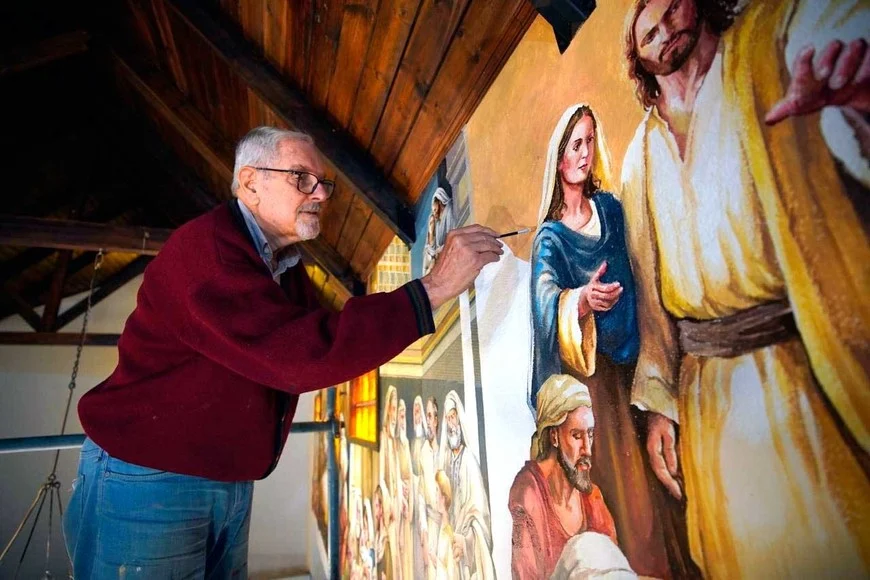
Seguramente, miles de años atrás, no pensaron los antiguos escribas, que un pintor en una comarca, iba a manifestar uno de los actos de amor mas grande: pintar una secuencia de los evangelios entera, para que quede una huella en la civilización humana.
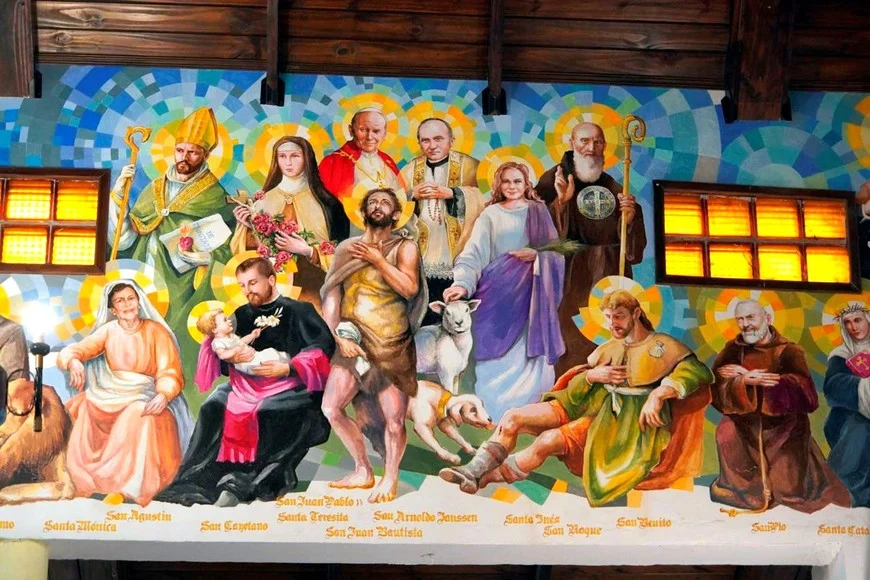
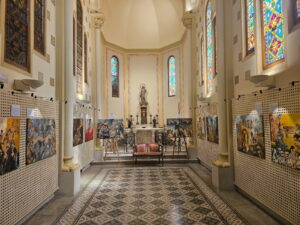
El mural de Hugo Lazzarini excede las interpretaciones y toda cuestión, inclusive la religiosa. Amalgama no solo las expresiones, sino el sentimiento y el amor por preservar y difundir episodios universales que hacen a la identidad de una nación e identidad.
TRASCENDER NO SOLO ES CRUZAR.
Si nos atenemos a las obras de los últimos años, Hugo Lazzarini no solo pinta cuerpos en situación y escenas. Indaga en profundas situaciones que atraviesan la existencia. Es como la lanza del soldado que atraviesa el cuerpo del hijo de Dios, para dejar salir sangre y agua. Y de esa mágica sustancia, asoman ríos de agua viva que pueblan y surcan la comarca santafesina.
El arte en Santa fe tiene profundas connotaciones italianizantes. Desde los primeros entelados pintados por los artistas que llegaron y dejaron sus huellas en lo que hoy es el antiguo «Centro» de la ciudad.
Hugo Lazzarini dota al norte de la ciudad, de una obra que no la tiene el centro. Sin lienzos y operetas berretas ni ideológicas, lleva las escenas del renacimiento y las temperaturas de color de hace 500 años, a una pared en una iglesia. Convierte un templo en una futura meca del arte y la pintura, desde el yermo que era hace doscientos años el camino real, que habla Lilia Valentinuzzi de Pussetto.
Es el amor de Hugo Lazzarini por la ciudad.
Es el amor que habla por los pinceles.
Es el amor hacia la obra de Dios y bajo la égida del padre Olidio Panigo, que sigue vigente.
Porque el amor, aún bajo la crisis y la ausencia del estado, sigue estando presente.
LAZZARINI’S ANGELIC TONGUES
The Bible says: «If I speak in the tongues of men and of angels, but have not love, I am only a resounding gong or a clanging cymbal.»
Surely, thousands of years ago, the ancient scribes did not imagine that a painter in a small region would manifest one of the greatest acts of love: painting an entire sequence of the Gospels to leave a lasting mark on human civilization.
Hugo Lazzarini’s mural transcends interpretation and all debate, even religious matters. It merges not only expressions but also the feeling and the love for preserving and spreading universal episodes that define the identity of a nation and its character.
TO TRANSCEND IS NOT MERELY TO CROSS OVER.
If we look at his works from recent years, Hugo Lazzarini does not just paint figures in context and scenes. He delves into profound situations that pierce through existence itself. It is like the soldier’s spear that pierces the body of the Son of God, letting blood and water flow. And from that magical substance, rivers of living water emerge, populating and furrowing the region of Santa Fe.
Art in Santa Fe has deep Italianate connotations, dating back to the first painted canvases by artists who arrived and left their mark on what is now the city’s old «Downtown.»
Hugo Lazzarini provides the north of the city with a work that the downtown area lacks. Free from canvases and tacky or ideological operettas, he brings Renaissance scenes and the color temperatures of 500 years ago to a church wall. He transforms a temple into a future mecca of art and painting, arising from the wasteland that was the Camino Real (Royal Road) two hundred years ago, as described by Lilia Valentinuzzi de Pussetto.
It is Hugo Lazzarini’s love for the city.
It is the love that speaks through the brushes.
It is the love for God’s work, under the aegis of Father Olidio Panigo, which remains ever-present.
Because love, even amidst crisis and the absence of the state, continues to endure.
LE LINGUE ANGELICHE DI LAZZARINI
Dice la Bibbia: «Se anche parlassi le lingue degli uomini e degli angeli, ma non avessi l’amore, sarei come un bronzo che risuona o un cembalo che tintinna.»
Certamente, migliaia di anni fa, gli antichi scribi non avrebbero mai immaginato che un pittore, in una regione di provincia, avrebbe manifestato uno dei più grandi atti d’amore: dipingere un’intera sequenza dei Vangeli affinché rimanesse un’impronta nella civiltà umana.
Il murale di Hugo Lazzarini supera le interpretazioni e ogni disputa, inclusa quella religiosa. Amalgama non solo le espressioni, ma il sentimento e l’amore nel preservare e diffondere episodi universali che costituiscono l’identità di una nazione e la sua stessa essenza.
TRASCENDERE NON È SOLO ATTRAVERSARE.
Se guardiamo alle opere degli ultimi anni, Hugo Lazzarini non si limita a dipingere corpi in posa e scene. Egli indaga situazioni profonde che attraversano l’esistenza. È come la lancia del soldato che trafigge il corpo del Figlio di Dio per lasciar uscire sangue e acqua. E da quella sostanza magica affiorano fiumi d’acqua viva che popolano e solcano il territorio di Santa Fe.
L’arte a Santa Fe possiede profonde connotazioni italianizzanti, sin dalle prime tele dipinte dagli artisti che arrivarono e lasciarono le loro tracce in quello che oggi è l’antico «Centro» della città.
Hugo Lazzarini dota il nord della città di un’opera che il centro non possiede. Senza tele o operette scadenti né ideologiche, porta le scene del Rinascimento e le temperature cromatiche di 500 anni fa sulla parete di una chiesa. Trasforma un tempio in una futura mecca dell’arte e della pittura, partendo da quella landa desolata che era, duecento anni fa, il Camino Real (Strada Reale) di cui scrive Lilia Valentinuzzi de Pussetto.
È l’amore di Hugo Lazzarini per la città.
È l’amore che parla attraverso i pennelli.
È l’amore verso l’opera di Dio che, sotto l’egida di padre Olidio Panigo, continua a vivere.
Perché l’amore, pur nel mezzo della crisi e dell’assenza dello Stato, continua a essere presente


3 pensamientos sobre “LAS LENGUAS ANGELICALES DE LAZZARINI”