HUGO LAZZARINI.NUEVO MURAL EN SAN JERONIMO NORTE

arte_hugo_lazzarini_fundacionrteviva
HUGO LAZZARINI.NUEVO MURAL EN SAN JERONIMO NORTE
Hugo Cayetano Lazzarini presentó su trabajo en el marco de las actividades de la Fundación Arteviva.
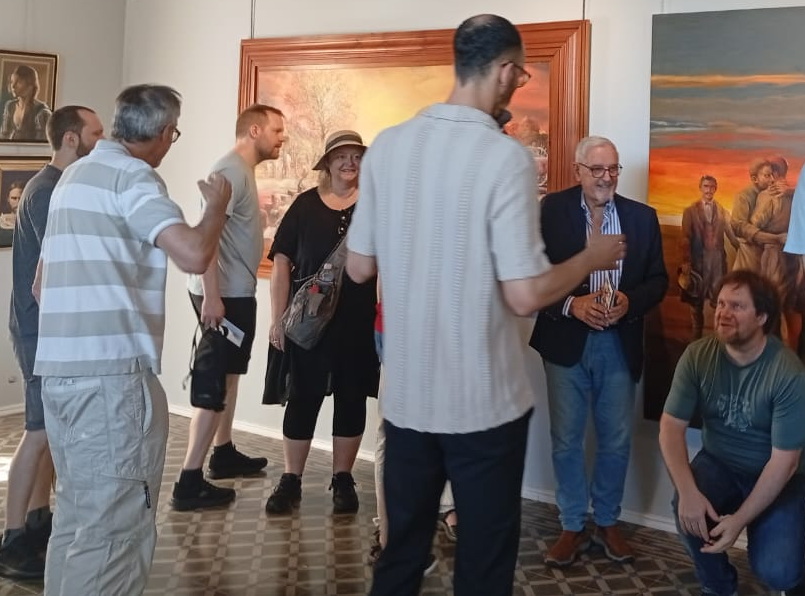
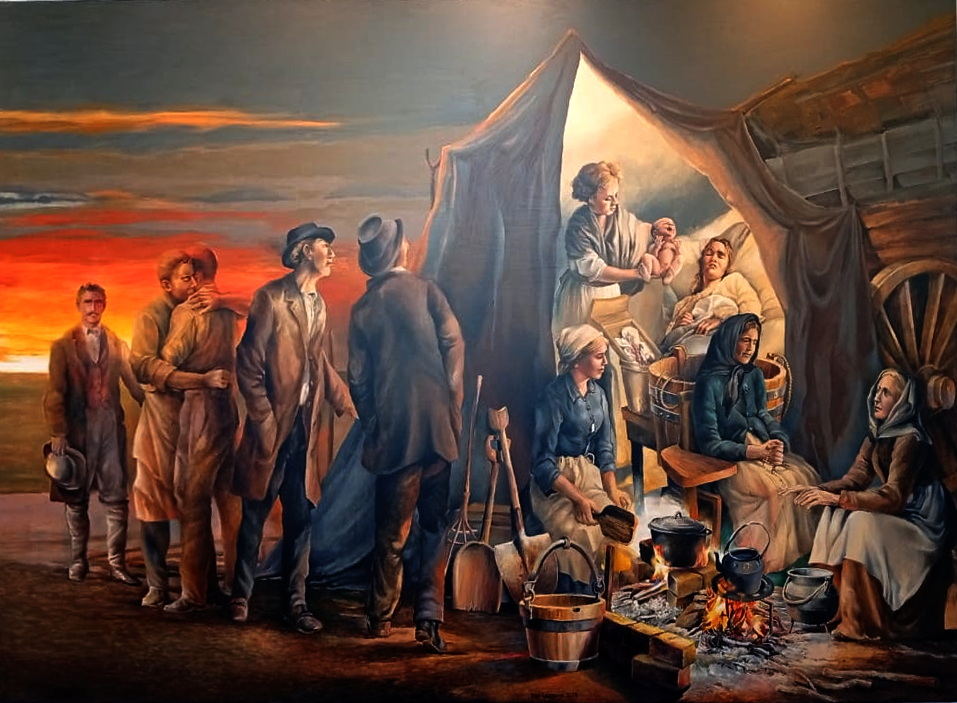
La obra es una pieza profundamente narrativa que captura la esencia del esfuerzo, el dolor y la esperanza de los primeros inmigrantes que poblaron la zona de Esperanza y las colonias agrícolas en el siglo XIX.
Emparentado con la serie «Gesta de la Esperanza», este cuadro es un exponente máximo de su estilo: un realismo épico que dignifica la figura del colono.
TEMAS CENTRALES.
Puede decirse que el tema central es el Nacimiento y la Supervivencia.
Podemos ver que el foco de luz principal se encuentra dentro de la carpa (o toldo precario). Allí vemos el nacimiento de un niño. Vamos a explicar que, en el contexto de la colonización, un nacimiento era un evento ambivalente: representaba la continuidad de la estirpe en la nueva tierra (esperanza), pero también el riesgo extremo debido a la falta de higiene, medicina y refugio adecuado.
En la obra de Lazzarini, puede verse la madre: Se la ve agotada, casi exhausta, reflejando el sacrificio físico de la mujer colona. También, La partera/ayudante: Sostiene al bebé en alto, un gesto que recuerda a la iconografía religiosa (la presentación del niño), simbolizando que la vida se abre paso en medio de la nada.
INTERIOR Y EXTERIOR
La composición divide el cuadro en dos mundos: El interior (la carpa). El mundo de las mujeres, el nacimiento, el cuidado y la fe. Puede verse a una mujer rezando con un rosario, lo que subraya la importancia de la religión como sostén espiritual ante la incertidumbre. Por otra parte: el exterior, o sea el mundo de los hombres y la naturaleza. Los hombres esperan afuera, reflejando la división de roles de la época, pero también una profunda ansiedad.
POTENTES DETALLES
Un detalle muy potente es el abrazo entre dos hombres a la izquierda. Este abrazo puede interpretarse de dos formas: Consuelo, ante la dureza del clima o quizás una pérdida (a veces en estos partos la madre corría grave peligro). Pero también, la Celebración contenida.
El alivio de que la vida ha llegado. El hombre que mira fijamente al espectador desde el extremo izquierdo parece actuar como un «testigo» histórico, rompiendo la cuarta pared para decirnos: «esto ocurrió, así fue como empezamos».
Es importante destacar en la obra, el trato que tiene Lazzarini de manera meticulosa con los objetos, que cuentan la historia de la precariedad:
El fuego y las ollas nos representan la domesticidad mínima. El fuego es supervivencia, calor y alimento en una llanura inhóspita. Por otra parte las herramientas (pala y azada): Apoyadas contra la carpa, indican que el trabajo no se detiene. Son los instrumentos con los que «domesticaron» la pampa.
La rueda de carro: A la derecha, simboliza el viaje, la migración y el hecho de que estas familias vivían «sobre ruedas» o en refugios temporales hasta poder construir sus casas de adobe o ladrillo.
El Crepúsculo. Analizando, el cielo está teñido de rojos y naranjas intensos. Esto no es solo un recurso estético; simboliza el «ocaso» de una vida vieja en Europa y el «amanecer» de una nueva nación. También sugiere un ambiente hostil: el frío de la noche en esas latitudes que está por caer, aumentando la sensación de vulnerabilidad de los personajes.
El autor utiliza un claroscuro muy marcado. La luz que emana de la carpa tiene una cualidad casi sagrada, convirtiendo una escena cotidiana de pobreza en una escena de trascendencia histórica. Su técnica es detallista, permitiendo ver las texturas de las telas bastas y la piel curtida por el sol.
Podemos decir que este cuadro es un homenaje a la resiliencia. No idealiza la colonización como un camino fácil; al contrario, muestra el barro, el frío, el cansancio y la precariedad.
Es una obra que busca rescatar la identidad de los pueblos de las pampas santafesinas recordándoles que su origen está basado en la solidaridad comunitaria (el grupo unido) y el sacrificio personal.
La obra puede verse hasta el 14 de Marzo en el espacio de la Fundacion Arteviva en San Jerónimo Norte.
Hugo Cayetano Lazzarini presented his work within the framework of the activities of the Fundación Arteviva.
The work is a deeply narrative piece that captures the essence of the effort, pain, and hope of the first immigrants who populated the Esperanza area and the agricultural colonies in the 19th century. Related to the «Gesta de la Esperanza» (Epic of Hope) series, this painting is a supreme exponent of his style: an epic realism that dignifies the figure of the settler.
CENTRAL THEMES
It can be said that the central theme is Birth and Survival. We can see that the main focus of light is inside the tent (or precarious shelter). There, we witness the birth of a child. In the context of colonization, a birth was an ambivalent event: it represented the continuity of the lineage in the new land (hope), but also extreme risk due to the lack of hygiene, medicine, and adequate shelter.
In Lazzarini’s work, the mother can be seen: she appears worn out, almost exhausted, reflecting the physical sacrifice of the settler woman. Also, the midwife/assistant: she holds the baby aloft, a gesture reminiscent of religious iconography (the presentation of the child), symbolizing that life breaks through in the middle of nowhere.
INTERIOR AND EXTERIOR
The composition divides the painting into two worlds: The interior (the tent), the world of women, birth, care, and faith. A woman can be seen praying with a rosary, underlining the importance of religion as spiritual support in the face of uncertainty. On the other hand: the exterior, the world of men and nature. The men wait outside, reflecting the division of roles of the era, but also a deep anxiety.
POWERFUL DETAILS
A very powerful detail is the embrace between two men on the left. This embrace can be interpreted in two ways: Consolation, in the face of the harsh climate or perhaps a loss (sometimes in these births the mother was in great danger). But also, a contained celebration—the relief that life has arrived. The man staring at the viewer from the far left seems to act as a historical «witness,» breaking the fourth wall to tell us: «this happened; this is how we began.»
It is important to highlight Lazzarini’s meticulous treatment of objects, which tell the story of precariousness: The fire and the pots represent minimal domesticity. Fire is survival, warmth, and food in an inhospitable plain. On the other hand, the tools (shovel and hoe) leaning against the tent indicate that work never stops. They are the instruments with which they «tamed» the pampas. The wagon wheel on the right symbolizes the journey, the migration, and the fact that these families lived «on wheels» or in temporary shelters until they could build their homes of adobe or brick.
THE TWILIGHT
Analyzing the sky, it is tinged with intense reds and oranges. This is not just an aesthetic device; it symbolizes the «sunset» of an old life in Europe and the «dawn» of a new nation. It also suggests a hostile environment: the cold of the night in those latitudes that is about to fall, increasing the characters’ sense of vulnerability.
The author uses a very marked chiaroscuro. The light emanating from the tent has an almost sacred quality, turning an everyday scene of poverty into a scene of historical transcendence. His technique is detailed, allowing one to see the textures of the coarse fabrics and the skin tanned by the sun.
This painting is a tribute to resilience. It does not idealize colonization as an easy path; on the contrary, it shows the mud, the cold, the fatigue, and the precariousness. It is a work that seeks to rescue the identity of the people of the Santa Fe pampas, reminding them that their origin is based on community solidarity and personal sacrifice.
The work can be viewed until March 14th at the Fundación Arteviva space in San Jerónimo Norte.
ITALIAN
Hugo Cayetano Lazzarini ha presentato il suo lavoro nell’ambito delle attività della Fundación Arteviva.
L’opera è un pezzo profondamente narrativo che cattura l’essenza dello sforzo, del dolore e della speranza dei primi immigrati che popolarono la zona di Esperanza e le colonie agricole nel XIX secolo. Legato alla serie «Gesta de la Esperanza», questo quadro è un massimo esponente del suo stile: un realismo epico che dignifica la figura del colono.
TEMI CENTRALI
Si può dire che il tema centrale sia la Nascita e la Sopravvivenza. Possiamo vedere che il fuoco di luce principale si trova all’interno della tenda (o riparo precario). Lì vediamo la nascita di un bambino. Nel contesto della colonizzazione, una nascita era un evento ambivalente: rappresentava la continuità della stirpe nella nuova terra (speranza), ma anche il rischio estremo dovuto alla mancanza di igiene, medicina e rifugio adeguato.
Nell’opera di Lazzarini si vede la madre: appare sfinita, quasi esausta, riflettendo il sacrificio fisico della donna colona. Inoltre, la levatrice/assistente: tiene il bambino in alto, un gesto che richiama l’iconografia religiosa (la presentazione del bambino), simboleggiando che la vita si fa strada in mezzo al nulla.
INTERNO ED ESTERNO
La composizione divide il quadro in due mondi: L’interno (la tenda), il mondo delle donne, della nascita, della cura e della fede. Si vede una donna che prega con il rosario, il che sottolinea l’importanza della religione come sostegno spirituale davanti all’incertezza. D’altra parte: l’esterno, ovvero il mondo degli uomini e della natura. Gli uomini aspettano fuori, riflettendo la divisione dei ruoli dell’epoca, ma anche una profonda ansia.
DETTAGLI POTENTI
Un dettaglio molto potente è l’abbraccio tra due uomini a sinistra. Questo abbraccio può essere interpretato in due modi: Consolazione, davanti alla durezza del clima o forse una perdita (a volte in questi parti la madre correva un grave pericolo). Ma anche, la celebrazione contenuta—il sollievo che la vita sia arrivata. L’uomo che fissa lo spettatore dall’estrema sinistra sembra agire come un «testimone» storico, rompendo la quarta parete per dirci: «questo è accaduto, così abbiamo iniziato».
È importante sottolineare nell’opera il trattamento meticoloso che Lazzarini riserva agli oggetti, che raccontano la storia della precarietà: Il fuoco e le pentole rappresentano la domesticità minima. Il fuoco è sopravvivenza, calore e cibo in una pianura inospitale. D’altra parte, gli attrezzi (vanga e zappa) appoggiati alla tenda indicano che il lavoro non si ferma. Sono gli strumenti con cui hanno «addomesticato» la pampa. La ruota del carro a destra simboleggia il viaggio, la migrazione e il fatto che queste famiglie vivevano «sulle ruote» o in rifugi temporanei fino a quando non potevano costruire le loro case di mattoni o fango.
IL CREPUSCOLO
Analizzando il cielo, esso è tinto di rossi e arancioni intensi. Questo non è solo un espediente estetico; simboleggia il «tramonto» di una vecchia vita in Europa e l’ «alba» di una nuova nazione. Suggerisce anche un ambiente ostile: il freddo della notte in quelle latitudini che sta per cadere, aumentando il senso di vulnerabilità dei personaggi.
L’autore utilizza un chiaroscuro molto marcato. La luce che emana dalla tenda ha una qualità quasi sacra, trasformando una scena quotidiana di povertà in una scena di trascendenza storica. La sua tecnica è dettagliata, permettendo di vedere le trame dei tessuti grezzi e la pelle bruciata dal sole.
Questo quadro è un omaggio alla resilienza. Non idealizza la colonizzazione come un percorso facile; al contrario, mostra il fango, il freddo, la stanchezza e la precarietà. È un’opera che cerca di riscattare l’identità dei popoli delle pampas di Santa Fe, ricordando loro che la loro origine si basa sulla solidarietà comunitaria e sul sacrificio personale.
L’opera può essere visitata fino al 14 marzo presso lo spazio della Fundación Arteviva a San Jerónimo Norte.
Hugo Cayetano Lazzarini präsentierte seine Arbeit im Rahmen der Aktivitäten der Fundación Arteviva.
Das Werk ist ein zutiefst narratives Stück, das die Essenz der Anstrengung, des Schmerzes und der Hoffnung der ersten Einwanderer einfängt, die im 19. Jahrhundert die Region Esperanza und die landwirtschaftlichen Kolonien besiedelten. Verwandt mit der Serie „Gesta de la Esperanza“ (Epos der Hoffnung), ist dieses Gemälde ein herausragendes Beispiel seines Stils: ein epischer Realismus, der die Figur des Siedlers würdigt.
ZENTRALE THEMEN
Man kann sagen, dass das zentrale Thema Geburt und Überleben ist. Wir sehen, dass sich der Hauptlichtfokus im Inneren des Zeltes (oder der prekären Unterkunft) befindet. Dort sehen wir die Geburt eines Kindes. Im Kontext der Kolonialisierung war eine Geburt ein ambivalentes Ereignis: Sie repräsentierte die Fortführung des Geschlechts im neuen Land (Hoffnung), aber auch ein extremes Risiko aufgrund mangelnder Hygiene, Medizin und angemessener Unterkunft.
In Lazzarinis Werk ist die Mutter zu sehen: Sie wirkt erschöpft, fast am Ende ihrer Kräfte, was das körperliche Opfer der Siedlerfrau widerspiegelt. Ebenso die Hebamme/Helferin: Sie hält das Baby hoch, eine Geste, die an die religiöse Ikonografie erinnert (die Darstellung des Kindes) und symbolisiert, dass sich das Leben mitten im Nichts seinen Weg bahnt.
INNEN UND AUSSEN
Die Komposition teilt das Bild in zwei Welten: Das Innere (das Zelt), die Welt der Frauen, der Geburt, der Fürsorge und des Glaubens. Man sieht eine Frau, die mit einem Rosenkranz betet, was die Bedeutung der Religion als geistige Stütze angesichts der Ungewissheit unterstreicht. Auf der anderen Seite: das Äußere, also die Welt der Männer und der Natur. Die Männer warten draußen, was die damalige Rollenverteilung, aber auch eine tiefe Angst widerspiegelt.
EINDRUCKSVOLLE DETAILS
Ein sehr kraftvolles Detail ist die Umarmung zwischen zwei Männern auf der linken Seite. Diese Umarmung kann auf zwei Arten interpretiert werden: Trost angesichts des harten Klimas oder vielleicht eines Verlusts (manchmal schwebte die Mutter bei diesen Geburten in großer Gefahr). Aber auch verhaltene Feier – die Erleichterung, dass das Leben angekommen ist. Der Mann, der den Betrachter vom linken Rand aus direkt anblickt, scheint als historischer „Zeuge“ zu fungieren und bricht die vierte Wand, um uns zu sagen: „Das ist geschehen; so haben wir angefangen.“
Es ist wichtig, Lazzarinis akribischen Umgang mit Objekten hervorzuheben, die die Geschichte der Prekarität erzählen: Das Feuer und die Töpfe repräsentieren die minimale Häuslichkeit. Das Feuer bedeutet Überleben, Wärme und Nahrung in einer unwirtlichen Ebene. Die Werkzeuge (Schaufel und Hacke), die am Zelt lehnen, deuten darauf hin, dass die Arbeit nie aufhört. Es sind die Instrumente, mit denen sie die Pampa „bezähmten“. Das Wagenrad auf der rechten Seite symbolisiert die Reise, die Migration und die Tatsache, dass diese Familien „auf Rädern“ oder in temporären Unterkünften lebten, bis sie ihre Häuser aus Lehm oder Ziegeln bauen konnten.
DIE ABENDDÄMMERUNG
Bei der Analyse des Himmels fällt auf, dass er in intensive Rot- und Orangetöne getaucht ist. Dies ist nicht nur ein ästhetisches Mittel; es symbolisiert den „Untergang“ eines alten Lebens in Europa und den „Anbruch“ einer neuen Nation. Es deutet auch auf eine feindselige Umgebung hin: die Kälte der Nacht in diesen Breitengraden, die kurz bevorsteht und das Gefühl der Verletzlichkeit der Charaktere verstärkt.
Der Autor verwendet ein sehr ausgeprägtes Chiaroscuro (Hell-Dunkel). Das Licht, das aus dem Zelt strahlt, hat eine fast heilige Qualität und verwandelt eine alltägliche Szene der Armut in eine Szene von historischer Transzendenz. Seine Technik ist detailreich und macht die Texturen der groben Stoffe und die von der Sonne gegerbte Haut sichtbar.
Dieses Gemälde ist eine Huldigung an die Resilienz. Es idealisiert die Kolonialisierung nicht als einfachen Weg; im Gegenteil, es zeigt den Schlamm, die Kälte, die Müdigkeit und die Prekarität. Es ist ein Werk, das die Identität der Völker der Pampa von Santa Fe bewahren möchte und sie daran erinnert, dass ihr Ursprung auf gemeinschaftlicher Solidarität und persönlichem Opfer basiert.
Das Werk ist bis zum 14. März in den Räumen der Fundación Arteviva in San Jerónimo Norte zu sehen.